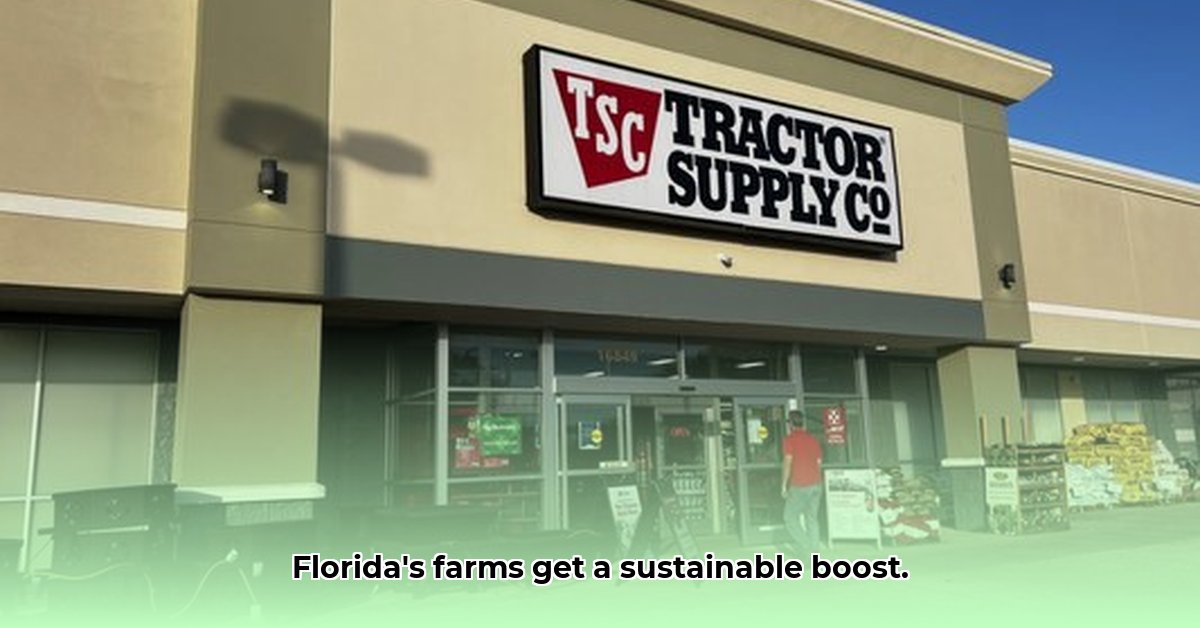
Tractor Supply Company (TSC), with its numerous Florida locations including Deltona, plays a significant, albeit indirect, role in the state's sustainable agriculture movement. While not explicitly focused on eco-friendly farming, TSC's accessibility and wide product range position it as a crucial supplier for farmers adopting sustainable practices. This article examines the extent of TSC's contribution and outlines actionable steps for all stakeholders involved. For more information on the Deltona location, visit the Deltona TSC page.
Tractor Supply's Influence: A Crucial Supply Chain Link
TSC's impact on sustainable agriculture isn't about revolutionary technologies; it's about providing readily available resources. The viability of sustainable farming hinges heavily on access to appropriate supplies and information. Does the Deltona TSC, for example, stock a robust selection of organic seeds and biopesticides? This question, and others like it, are critical to understanding TSC's true influence.
A farmer striving for sustainability faces significant challenges if essential supplies are inaccessible. A widely accessible retailer like TSC, therefore, occupies a strategic position to facilitate sustainable practices. However, simply stocking sustainable products isn't sufficient. Prominent placement, clear labeling, and knowledgeable staff are equally crucial for driving adoption.
How effectively TSC achieves this is a key area requiring further investigation. Currently, we lack quantifiable data on the proportion of TSC's sales dedicated to sustainable agriculture products within its overall agricultural offerings. This lack of transparency hinders a thorough assessment of its impact.
Deltona Tractor Supply and Sustainable Farming: A Data-Driven Assessment
To effectively assess TSC's role, we need a more detailed understanding. What specific sustainable products are available at the Deltona store and other Florida locations? What percentage of farmers utilize TSC for sustainable supplies? How does TSC’s marketing and in-store promotion contribute to increased awareness and adoption of sustainable practices? These questions require robust data collection and analysis.
Key Data Gaps: While we know TSC stores are conveniently located and carry a broad range of agricultural supplies, we lack precise data on:
- Product Availability: The exact range of sustainable farming products stocked at each store.
- Farmer Adoption: The number of farmers actively using TSC for sustainable agriculture supplies.
- Promotional Efforts: The extent to which TSC actively promotes and markets sustainable farming practices.
The lack of readily available data on specific product ranges and farmer adoption rates prevents a full evaluation of TSC’s current contribution.
Working Towards a Greener Future: Actionable Steps for All Stakeholders
Sustainable agriculture requires a collective effort. Effective progress demands active participation from all involved parties:
Florida Farmers: Actively explore TSC's sustainable product offerings. Provide direct feedback to TSC staff on needed products and improvements. Participate in farmer cooperatives and advocacy groups to amplify your voice and needs.
Tractor Supply Company (TSC): Conduct a thorough inventory analysis of all Florida stores, prioritizing sustainable products. Develop a dedicated section or online catalog highlighting sustainable options. Invest in staff training to enhance product knowledge and customer service regarding sustainable agricultural practices.
Florida Government Agencies: Offer financial incentives (e.g., grants, tax breaks) to farmers adopting sustainable practices. Collaborate with TSC to educate farmers about available resources and best practices.
Environmental Organizations: Partner with TSC to expand the range of sustainable products available. Advocate for policies that support sustainable agricultural practices. Provide farmers with educational resources and technical support.
These actions represent crucial steps towards achieving meaningful progress. Their implementation requires a collaborative, data-driven approach.
A Roadmap for Comprehensive Analysis
To fully understand TSC's potential impact, a comprehensive investigation is necessary. The following steps are essential:
Detailed Product Inventory: Conduct a thorough inventory audit of all TSC locations in Florida, categorizing and quantifying the availability of sustainable agriculture products. This should involve both in-store audits and evaluations of online catalogs.
Farmer Surveys and Interviews: Collect data directly from Florida farmers regarding their utilization of TSC for sustainable supplies, including identifying unmet needs and challenges.
Competitive Analysis: Compare TSC's sustainable product offerings and pricing against those of key competitors in the Florida agricultural supply market to evaluate their relative competitiveness and market share.
Supply Chain Transparency: Investigate TSC's supply chain for sustainable products to identify any bottlenecks or limitations affecting accessibility or affordability. Transparency of sourcing will build trust.
The Future of Florida Farming: A Collaborative Imperative
TSC stores in Florida, including Deltona, possess significant potential to support the state's transition to sustainable agriculture. But realizing this potential requires a concerted effort from all stakeholders. By adopting a data-driven approach and fostering collaboration, Florida’s farming sector can move closer to a more sustainable and resilient future. Continuous monitoring and evaluation are crucial to adapting strategies in response to evolving needs and technological advancements.